

Utility-scale solar farms contain millions of pounds worth of infrastructure, often located in isolated areas and visited by people from multiple organisations throughout the year. Clear oversight is needed of who is accessing the site, when they arrive, and what work they are authorised to perform. Without it, that investment can quickly become vulnerable to theft, safety incidents, and unnecessary downtime.
The risk is real. According to analysis cited by Thames Valley Police, solar farm theft in the UK caused an estimated £7.1 million in losses between January 2022 and September 2024, largely through the theft of copper cabling and earthing systems. For asset owners, these incidents rarely end with the value of the stolen equipment. Repair costs, site investigations and extended outages can quickly multiply the financial impact and affect insurance costs.
And theft is only one part of the problem.
Every site visit, whether from contractors, maintenance teams or third-party specialists, introduces operational risk. Incorrect procedures, safety breaches, and plain old human error can lead to all sorts of problems for an asset owner. This includes equipment damage, delayed re-energisation, or assets left offline longer than expected. For a revenue-generating asset, even short periods of unexpected downtime can have a measurable impact on performance. When you factor in the more stable MWh rates for solar, this leaves little room for manoeuvre within thinning margins.
The gap between solar farm security and operations
Traditionally, solar sites rely on two separate systems to manage these risks.
Security providers monitor CCTV and respond to unauthorised access, helping deter criminal activity. Meanwhile, O&M teams manage the operational side of the asset, ensuring in-house teams and contractors follow the correct procedures, work to approved RAMS, and operate safely on site.
Both services are valuable, but they typically operate independently of one another.
This creates a blind spot.
A security operator may see someone enter the site wearing PPE, but without visibility of work schedules, RAMS documentation or operational plans, it can be difficult to verify whether that individual is authorised, competent, and performing work exactly as planned.
Likewise, O&M teams may approve site visits and planned outages, but without real-time visual oversight, they rely on contractors to report when work has been completed, and the asset can safely return to service.
For asset managers, this fragmentation creates unnecessary risk and unnecessary delays.
Why fragmented monitoring impacts solar asset performance
When security monitoring and operational oversight operate separately, small issues can quickly escalate.
A contractor arriving outside of an approved schedule may not be challenged. Planned works may overrun without being immediately noticed. In some cases, assets remain offline simply because no one realises the work has been completed and the site can be re-energised.
These kinds of incidents are rarely dramatic, but over time, they can quietly erode asset performance and inevitably impact the asset’s ROI.
For asset managers responsible for portfolio performance, these situations represent more than operational inconvenience. They directly impact availability, revenue and risk exposure.
What is integrated solar farm monitoring?
An integrated control room brings these two functions together.
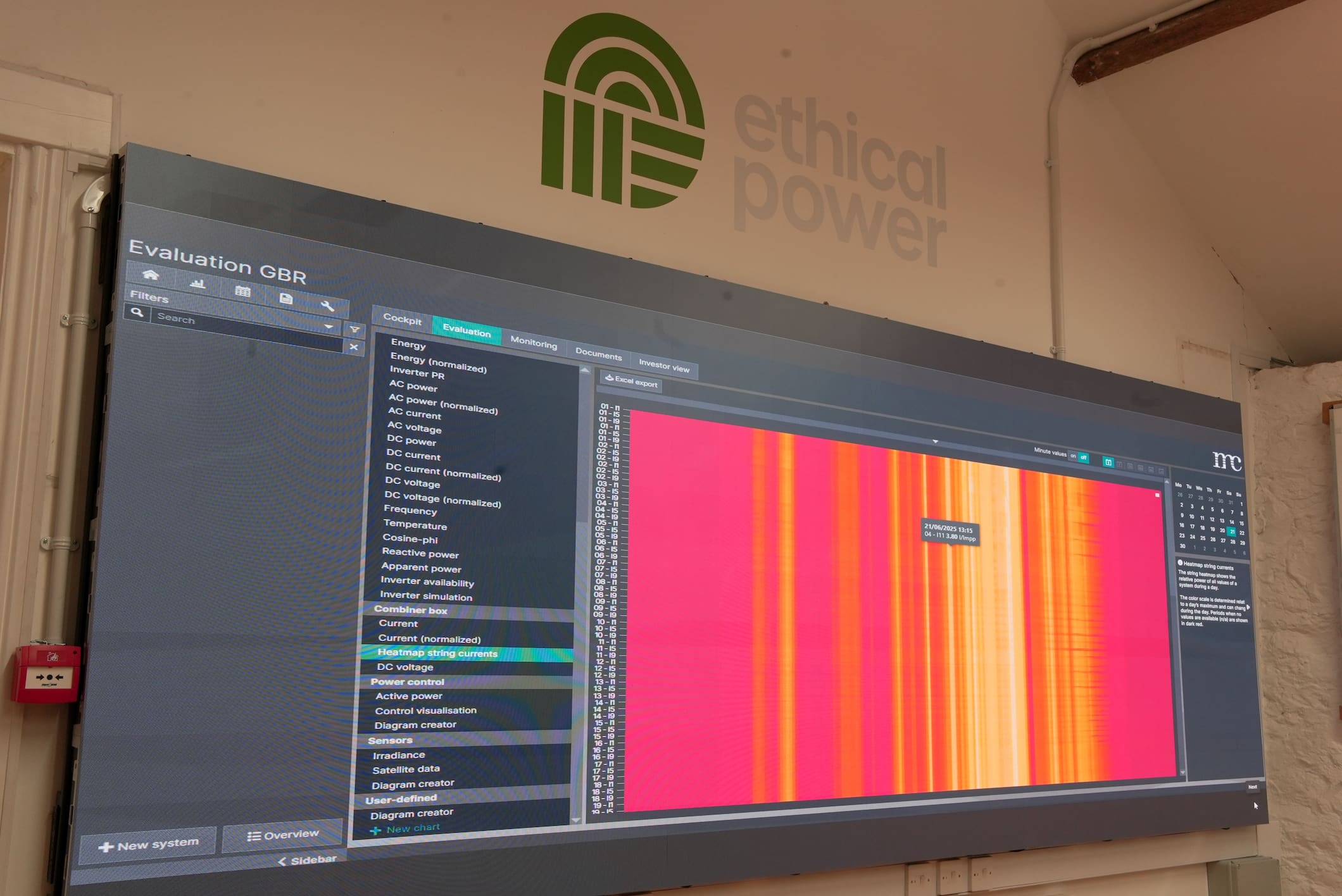
By combining performance monitoring, operational oversight and CCTV security in a single control environment, asset managers gain full visibility of what is happening on site at any given time.
Operators have access not only to live security footage but also to work schedules, RAMS documentation and operational plans. This means they can confirm whether individuals arriving at the site are authorised, verify that work is being carried out safely, and track when contractors enter and leave the asset.
A Control Room is more than a desk and some laptops, though. If you want to be sure that the team overseeing your site are fully trained and vetted, you will need to go with a Security Systems and Alarms Inspection Board (SSAIB) accredited Alarm Receiving Centre (ARC). An accredited Control Room, such as Ethical Power’s Category two ARC, will have certified eligibility for a police response, staff vetting, and a guarantee of continuity or service.
This integrated solar monitoring allows control room teams to:
- Verify authorised site access in real time
- Identify unauthorised activity before it escalates
- Monitor contractor activity during planned outages
- Detect operational issues that may delay re-energisation
- Escalate potential safety or security risks immediately
Monitoring solar farms at scale: a growing challenge
As solar portfolios scale, maintaining visibility across multiple, geographically dispersed sites becomes increasingly complex. Multiple contractors, overlapping activities and site-specific requirements increase the risk of unplanned downtime and security gaps.
An integrated control room gives asset managers centralised oversight, protecting both asset security and performance.
Ethical Power’s blended control room combines performance monitoring, operational oversight and CCTV security into a single service, giving asset managers real-time visibility of who is accessing their sites and how those visits affect performance.
If you want greater control over who accesses your assets and how those visits impact availability, speak to the Ethical Power team about our solar farm monitoring and security solutions to protect your assets and maximise performance.
If you’re tired of managing multiple contractors, our in-house O&M team can provide you with the peace of mind you need for all O&M, monitoring and security needs combined.