

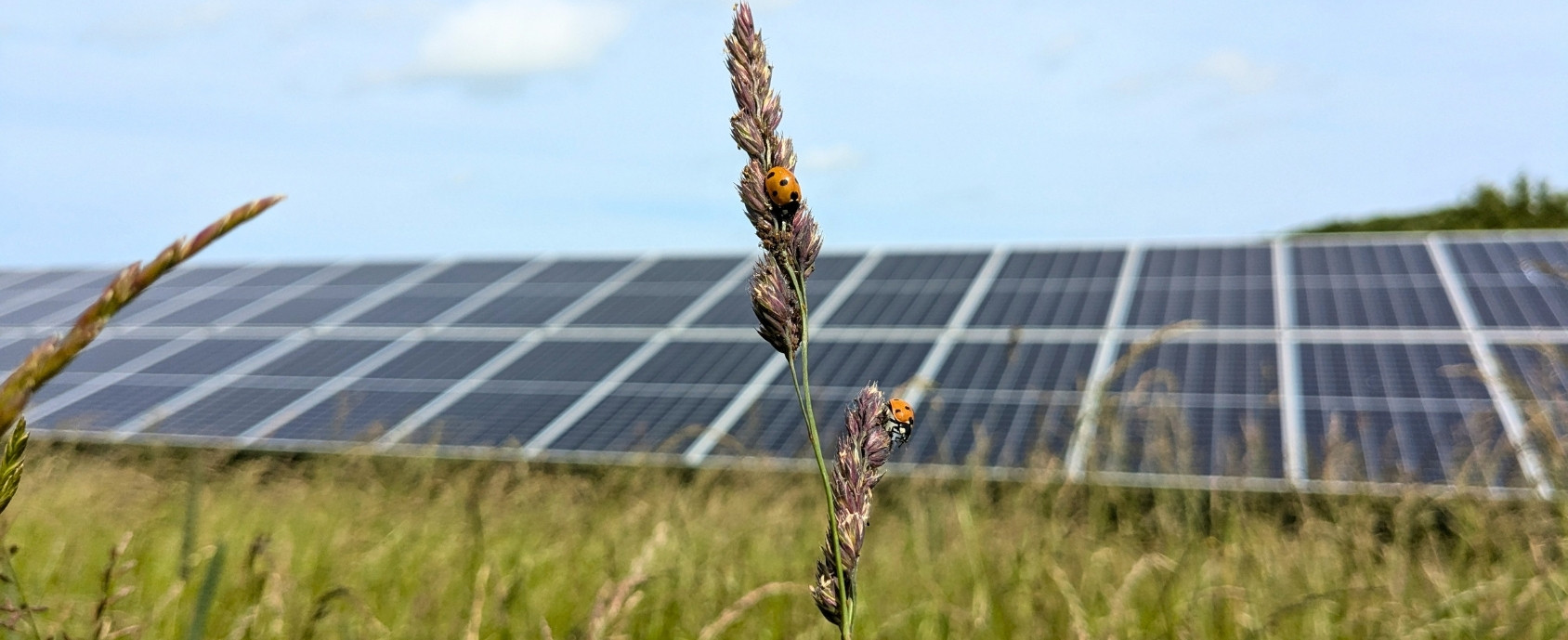
Nature is trial and error, repetition and struggle.
Trying to deliver Biodiversity Net Gain on a renewable energy site is no different, and it sits awkwardly alongside the planning frameworks, EPC contracts, and asset management schedules that currently govern how we try to do it.
At Ethical Power, we’ve been delivering BNG across utility-scale solar and BESS sites for years. The projects we work on typically show net gains of around 80%, with several projects exceeding 100%. We’re proud of those numbers, and they are proof that BNG isn’t just a compliance requirement for us, but something central to our ethos and way of working.
We would, however, be doing the industry a disservice if we discussed BNG without also being honest about why implementing it is harder than it looks, and why the gap between what gets planted and what actually gets measured, managed, and sustained is one of the sector’s most underacknowledged challenges.
We consider the introduction of BNG requirements to renewable energy builds (as well as all other new developments) to be an excellent idea that will help the land and the people who work it for years to come, but it is not yet perfect.
Together, we can help it get there.
Why solar farms and BNG works
A solar farm, at its core, is a temporary structure that, when managed properly, should leave the land in a much better ecological condition than when construction started.
Most utility-scale solar projects in the UK are developed on intensively farmed agricultural land. Soil quality frequently sits at Grade 3b or lower, meaning it is only capable of producing moderate yields at best, typically of cereals or other fodder for livestock.
Arable monocultures are, by their nature, very low on biodiversity. This is not a criticism; it is the nature of food production. When you plant a field of wheat, you typically only want wheat. Anything else is either a waste of space or an active detriment to your crops. Growing enough food to feed a country is an incredibly complicated and difficult task, and one that we are grateful for, but crops and biodiversity can’t easily occupy the same space.
However, when you rest poor quality arable land and introduce native wildflower margins, hedgerow planting, pollinator corridors, and reduced chemical inputs across a site of tens or hundreds of hectares, the percentage uplift relative to baseline is significant. This is partly down to the tiny footprint that solar farms have; only about 3-5% of the land is physically impacted by the equipment, but also because the starting point is so low.
The harder projects are those near watercourses, ancient woodland edges, or land that already supports meaningful habitat diversity. There, the gap between baseline and target narrows, every gain is harder won, and the consequences of getting the establishment phase wrong are more significant. Projects like these are where the structural gaps in how the industry manages BNG become most visible.
The gaps nobody wants to talk about
BNG delivery on a solar site passes through several hands: the developer who designs the ecological baseline into the planning application, the EPC contractor who plants and establishes the habitat during construction, and the Operations and Maintenance (O&M) provider who manages the site operationally for the next two to three decades.
Each of these parties is typically working to their contract. The problem is that the contracts, taken together, don’t yet add up to a coherent, standardised system for delivering BNG outcomes reliably over time. The contractual incentives and disincentives simply do not yet exist for BNG to be fully successful.
What mandatory BNG for major infrastructure changes
From November 2026, BNG becomes mandatory for Nationally Significant Infrastructure Projects, including major energy infrastructure. For most utility-scale solar developers already delivering BNG voluntarily, this doesn’t represent a dramatic change in practice. What it does represent is the direction of travel: BNG outcomes will increasingly be subject to formal scrutiny, and the gap between what’s documented at planning stage and what’s actually delivered on the ground will become harder and harder to ignore.
The new NSIP framework is proportionate; it applies to impacted habitats rather than entire site footprints, and includes simplified treatment of temporary disturbance, but it signals clearly that voluntary best practice is becoming minimum expectation. The industry has a window to get ahead of that shift rather than be caught by it.
What good looks like, and what needs to change
We don’t think the answer is more regulation, at least not yet. We think the answer is better agreements between parties who already want to get this right, supported by an honest industry conversation about where the current frameworks fall short. The opportunity to deliver clean energy to the grid while simultaneously restoring native habitats is one that cannot be passed up.
With that in mind, here’s what we think could help knit everything together:
Ecological establishment scopes that extend beyond initial planting.
O&M contracts should include defined responsibilities for monitoring, remediation, and adaptive management through the first three to five years of habitat establishment, the period when most failures occur and when intervention is most effective.
Clearer cost allocation for climate-related failures.
When extreme weather events damage established habitat, the obligation to reinstate should be documented clearly in agreements, not left as an uncomfortable conversation after the fact.
Longer-term O&M ecological integration.
Biodiversity management and asset management are not separate disciplines on a well-run site. The O&M provider is best placed to identify and respond to habitat changes, but only if their scope, tools, and reporting frameworks reflect that responsibility.
Better support for the ecological monitoring profession.
This is an industry-wide ask rather than a contractual one. The ecologist shortage is a structural problem that will undermine BNG outcomes across the sector until it’s addressed. Training pipelines, better integration of remote monitoring technology, and clearer commissioning pathways for long-term site monitoring would all help.
Our position
We’re not writing this because we have it all figured out. We’re writing it because we’ve seen what happens when these gaps aren’t addressed: expensive native species that don’t survive, monitoring that doesn’t happen, and BNG commitments that exist on paper long after the conditions that made them achievable have changed. As it stands, this will likely leave asset owners holding the baby when regulators eventually come in and query why there are only 10km of new hedgerow when there should be 15, or where all those saplings you planted last year have gone.
The regulatory direction is clear. The commercial logic is there. And the ecological case doesn’t need making; solar sites on former monoculture or brownfield land can be genuinely transformative for local biodiversity, if the systems around them are designed to make that happen reliably.
We’re interested in talking to asset owners, developers, and O&M clients who want to build agreements that actually deliver on BNG commitments over the long term. Not because we’re required to. Because it’s the right way to do it.