

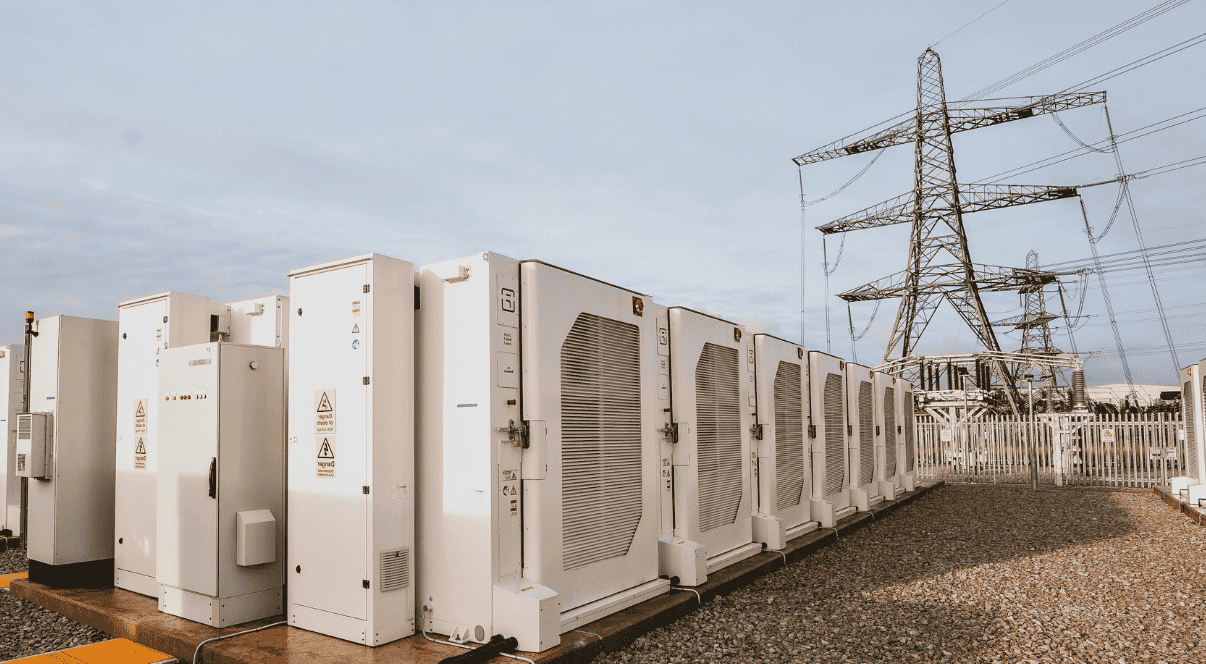
Renewable energy in the UK is experiencing a boom, with battery storage and improved grid connections helping to increase the efficiency and availability of solar and wind. These projects are as complex as they are important, making Project Planners a crucial part of the delivery team.
We sat down with Majid Amoudi to find out more about what its like working on these vital utility scale battery storage and grid projects.
Tell us a little bit about yourself and your role at Ethical Power.
I’m Majid, working as Project Planner at Ethical Power. I have a total of 16 years of experience in the construction industry, with 12 years being in the high voltage grid sector. I worked in the Middle East for 14 years and after moving to the UK, I was keen to work in the renewable energy sector because my experience aligned with this.
What has been the most interesting change that you have seen in the renewable energy industry?
The renewable energy industry is revolutionary – it was being tried and tested, with a few errors here and there but now, with technological advancements, there are a lot of positive changes. There is a huge growth of renewables in the UK currently, as opposed to the past where people where dependant on crude oil and other less environmentally friendly sources.
What does your day-to-day look like as a Project Planner?
A Project Planner continually analyses the project, whether that’s performance, delay or forecasting. This allows us to alert the wider project teams about any potential risks that can be avoided early on.
Is there a project that you are especially proud of?
One project I’m particularly proud of was delivering a 300MW BESS project with a 132kV grid connection under an NEC4 contract, supplying electricity to 650,000 homes around East London.
The client placed strong emphasis on strict contractual compliance, programme transparency, and early warning processes. Successfully managing the planning and programme elements within that framework, while maintaining collaboration across stakeholders, was extremely rewarding.
It demonstrated how disciplined contract management and proactive communication can drive certainty in complex renewable projects.
What sort of challenges were involved in getting such a large project over the line?
Like many UK solar and BESS projects, the key challenges revolved around grid constraints, evolving planning requirements, and programme risk management.
Balancing client timelines, technical design iterations, and stakeholder expectations required proactive sequencing and constant risk review.
The biggest challenge was managing uncertainty, but through clear communication, detailed programme control, and early identification of critical path risks, we kept the project moving forward.
From a company perspective, it reinforced that early risk visibility and cross-team collaboration are critical to delivering certainty in an increasingly complex UK renewables market.
It also highlighted that flexibility in programme management, particularly on BESS projects, is essential given how quickly technical and regulatory requirements can evolve.
What surprised you about your role?
At my previous role, there wasn’t a lot of protocol for a Project Planner, which made me feel very restricted in my role. Whereas now, I feel like my role at Ethical Power has given me a freehand to openly voice any challenges with the project. Other companies that I’ve worked at may have viewed this as a criticism to their work, but at Ethical Power, this approach is highly regarded and treated as a top priority.
What qualities do you think make for a good Project Planner?
Forward thinking. A Project Planner is constantly required to analyse different elements of a project, and so a thorough understanding of what each of the departments are doing is crucial.
What is one piece of advice that you would give to someone who wants to become a Project Planner like you?
I would definitely say developing a strategic thinker mindset with everything. A project planner needs to believe that their vision can contribute to the project in one way or another. Good people skills are also necessary, so your team and other departments can rely on you for support when this is most needed. Understanding the scope of work, especially subcontracting and contractual management, will help massively when it comes to building a career in project planning.
Can the skills that a Project Planner acquires be transferred to other roles?
Yes, definitely! This is mainly because the role of a Project Planner is so dynamic – we work from the office, yes, but we are also required to make frequent visits to site. Having this exposure to site activities can really open up a lot of avenues for an individual looking to grow in the field.
Why are there so few young people entering this industry?
I would say that it comes down to the lack of awareness among young people. And this can perhaps be fixed by renewable energy organisations creating training institutions for young adults graduating from college and university, backed by support from the government.
In your experience, do you think this problem exists outside the UK?
I believe the UK had a vision to expand in renewables and contribute towards a greener future; however, there was a lack of strategic planning in terms of people resources. I would even go so far as to say that staffing is the biggest crisis for this industry. The good thing is that the renewables sector is so dynamic that it provides extreme job security.
I feel like I am truly making a difference to the company and to the industry in my current role as a Project Planner, and that is a very fulfilling feeling to have. I would love to be able to one day use my experience to build an offshore wind farm.
On a broad spectrum, I would say that the renewable energy industry has a good future due to the amount of investment that has taken place over the years, whether that’s monetary or otherwise. There is an expandable growth potential, and this is just the beginning. The skills of everyone who works in the renewable energy sector are going to be invaluable.